Using abrasive flow machining, flexible abrasive media can be directed through complicated passages and internal features that conventional polishing tools may not be able to reach.
AFM can therefore provide both access and repeatability for difficult finishing applications.
Polishing Internal Flow Paths
Many components depend on passages that carry air, fuel, oil, coolant, hydraulic fluid, or other media.
The geometry may be produced through drilling, milling, casting, EDM, or additive manufacturing.
Even when the dimensions are correct, the resulting surface may still contain roughness or machining marks.
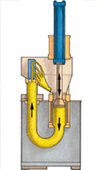
AFM uses the internal pathway itself to guide the polishing media across those surfaces.
Charlotte-Area Manufacturing Applications
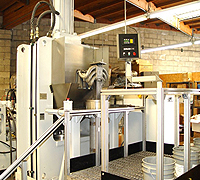 Charlotte and the broader Carolinas manufacturing corridor include major automotive, aerospace, energy, industrial machinery, and precision manufacturing operations.
Components in these sectors may include:
- Engine-related flow passages
- Hydraulic manifolds
- Pumps and turbines
- Aerospace components
- Precision dies and molds
- Industrial valve components
- Additive-manufactured passages
Automotive and Motorsports Applications
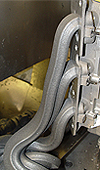 The Carolinas also have a strong automotive and motorsports manufacturing presence.
AFM has been used to improve fuel and air flow paths in performance automotive applications for decades.
Smoother internal surfaces and controlled passage geometry can be desirable in components where efficient flow contributes to performance.
The exact impact depends on the component design, so Extrude Hone AFM develops the process around the customer's specifications rather than making a universal performance claim.
Typical Surface Finish Results
Examples of AFM finish improvement published by Extrude Hone AFM include 16–8 Ra to approximately 3–4 Ra, 32 Ra to 8 Ra or better, and 64 Ra to 16 Ra or better.
Other starting conditions may also be improved.
Because passage geometry and material affect abrasive action, the finished result needs to be determined for the individual application.
AFM for Hard and Soft Metals
Flow polishing can be applied to aluminum, bronze, copper, hardened metals, titanium, Inconel, and superalloys.
This provides flexibility for Charlotte manufacturers working across automotive, aerospace, hydraulic, and energy applications.
Controlled Tooling and Production Repeatability
Extrude Hone AFM uses tooling to constrain the media and send it through the surfaces requiring treatment.After a process has been developed, the same tooling and controlled conditions can support repeatable production work.
This can reduce dependence on difficult manual internal polishing.
Call (562) 531-2976 to discuss Charlotte, NC flow polishing with Extrude Hone AFM.
FAQs
Can AFM polish engine airflow passages?
Yes. Automotive fuel and air passages are established AFM applications.
Can AFM be used for hydraulic parts?
Yes. AFM can reach intricate and intertwined hydraulic flow passages in suitable components.