Abrasive flow machining uses a flexible polymer media loaded with abrasive particles.
The media moves through the actual internal pathway of the component, allowing restrictive or rough surfaces to be refined without requiring conventional tools to reach every area directly.
Automotive Components Suitable for AFM
Extrude Hone AFM can evaluate components such as:- Intake manifolds
- Exhaust manifolds
- Turbo impellers
- Turbo housings
- Pumps
- Cylinders
- Internal fuel passages
- Internal air passages
The process can be applied across many engine configurations, including diesels, turbos, hemis, motorcycles, and multi-cylinder gasoline engines.
How AFM Improves Engine Flow
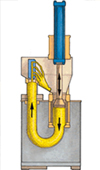
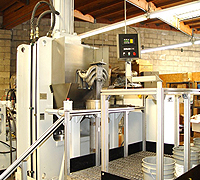 During abrasive flow machining, hydraulic pressure moves the media through the engine component.
Abrasive particles suspended throughout the polymer contact the internal surface and gradually remove raised areas.
The process can smooth runner walls, transitions, and other restricted features along the passage.
Unlike manual porting, AFM can work around internal bends that are difficult to reach directly.
Automotive Manufacturing and Performance in Ohio
Ohio has a substantial automotive manufacturing and supplier base, and Columbus sits within a broader regional network of engine, transportation, racing, and precision machining businesses.
Automotive AFM may be useful for both production-oriented parts and individual performance builds.
Applications can include restoration vehicles, race engines, trucks, diesel projects, custom builds, and specialty components.
Intake Manifold Flow
Among all automotive components, the intake manifold is the most common target for AFM.
Extrude Hone AFM recommends it as the strongest single component to consider when a customer wants to improve engine flow through extrude honing.Improving runner surfaces may help the engine receive air more efficiently and contribute to better volumetric efficiency.
Potential Performance Benefits
Extrude Hone AFM reports that automotive AFM can improve fuel and air flow by up to 25 percent in suitable applications.Better flow can potentially support:
- Increased horsepower
- Improved torque
- Better cylinder filling
- More effective exhaust evacuation
- Improved combustion efficiency
Actual results vary with engine displacement, tuning, intake design, exhaust configuration, forced induction, and other factors.
Different Materials Require Different AFM Strategies
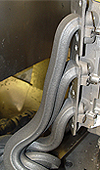 Abrasive flow machining can be adapted for aluminum, cast iron, and other suitable automotive metals.
Company service-area guidance notes that aluminum typically calls for a lighter abrasive approach while cast iron can use a heavier one.
Controlled and Repeatable Results
Automotive AFM can remove up to approximately 1 millimeter, or .040 inch, in suitable flow-improvement applications.
Once Extrude Hone AFM develops the appropriate process for a component, that process can be repeated on similar parts.
This makes AFM useful for manufacturers, builders, and performance applications where consistency matters.
Call (562) 531-2976 to discuss automotive AFM for Columbus, OH and request a quote.
FAQs
Can AFM improve fuel and air passages?
Yes. Improving internal fuel and air flow is the primary automotive application for abrasive flow machining.
Can AFM process intake and exhaust components?
Yes. Intake manifolds are especially common, while suitable exhaust manifolds and other engine components may also be evaluated.
Can Columbus customers send parts to Extrude Hone AFM?
Yes. Extrude Hone AFM serves automotive customers throughout the United States.