Automotive applications are one of Extrude Hone AFM's long-established specialties. The company helped pioneer the use of AFM in the automotive industry, where the process is used to improve fuel and air movement through engine components. In suitable applications, Extrude Hone AFM reports flow increases of up to 25 percent.
How Automotive Abrasive Flow Machining Works
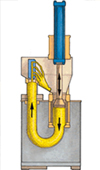
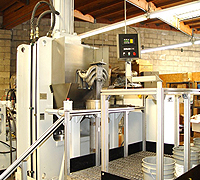 During AFM, abrasive-laden media is hydraulically forced through the passages of an engine component.
The media conforms to the existing internal geometry rather than relying on a rigid cutting tool. As it moves through bends, transitions, and restrictions, abrasive particles remove controlled amounts of material from the surfaces they contact.
The process can help smooth casting texture, machining irregularities, and restrictive areas while maintaining the basic design of the passage.
Variables such as media viscosity, abrasive concentration, particle size, tooling, pressure, and workpiece material can be adjusted for the individual component.
Automotive Parts Suitable for AFM
Automotive AFM may be considered for components including:
- Intake manifolds
- Exhaust manifolds
- Cylinder-related passages
- Turbo impellers
- Turbo housings
- Pumps
- Fuel passages
- Air passages
- Other suitable engine components through which air or fuel flows
Why Improve Fuel and Air Flow?
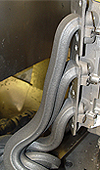 An engine depends on moving the correct volume of air and fuel into the cylinder and moving exhaust gases out again.
Restrictions and rough internal passages can interfere with that movement.
By smoothing and refining suitable passages, AFM can improve volumetric efficiency and support more complete filling and evacuation of the cylinders.
According to Extrude Hone AFM, automotive AFM can contribute to improvements in horsepower, torque, thrust, fuel efficiency, and combustion efficiency in suitable applications. Results vary according to the engine, part, starting geometry, and overall configuration.
Los Angeles Automotive and Motorsports Applications
Los Angeles and Southern California support a large automotive culture that includes performance shops, restoration specialists, race and track applications, custom vehicle builders, engine machinists, and specialty manufacturers.
AFM can be useful for both performance-oriented projects and specialized engine components where conventional hand porting may not reach every internal area uniformly.
Because the media follows the actual internal pathway, the process can provide consistent finishing around twists and bends.
Aluminum, Cast Iron, and Other Engine Materials
Automotive components can require different abrasive strategies depending on the material.
Extrude Hone AFM can vary media and abrasive characteristics for materials such as aluminum and cast iron. A softer material may require a different formulation from a harder or more wear-resistant workpiece.Repeatable Flow Matching
One advantage of a controlled AFM process is repeatability.
Once Extrude Hone AFM establishes tooling, media, pressure, and processing variables for a specific component, similar parts can be treated under the same conditions.
This can be useful when matching multiple runners or processing repeated production components.
Request Automotive AFM in Los Angeles
Whether you are working with an intake manifold, turbo component, engine passage, or another automotive part, Extrude Hone AFM can review the component and determine whether abrasive flow machining is appropriate.
Call (562) 531-2976 to discuss automotive AFM for Los Angeles, CA and request a quote.
Automotive AFM FAQs
What automotive part benefits most from AFM?
The intake manifold is one of the most common and potentially beneficial automotive applications because it plays a major role in distributing air and fuel to the engine.
Can AFM be used on aluminum parts?
Yes. Abrasive media can be selected for aluminum as well as harder materials such as cast iron.